Introduction
The global skincare industry continues to grow year after year. For entrepreneurs, influencers, and beauty professionals looking to launch their own skincare brand, the most critical decision is choosing the right manufacturing partner. This guide walks through everything you need to know about starting a skincare brand through private label and OEM (Original Equipment Manufacturing).
Whether you are based in North America, Southeast Asia, or anywhere in between, understanding the manufacturing process is the first step toward building a successful beauty brand.
What Is Private Label and OEM Skincare?
Before diving in, it is important to understand the two main manufacturing models:
Private Label Manufacturing
With private label manufacturing, you choose from existing formulations developed by the factory. Your brand name and custom packaging are applied to ready-made products. This is the fastest and most cost-effective way to launch, with lower minimum order quantities (MOQs) and shorter lead times. Many successful indie beauty brands started with private label products.
OEM (Original Equipment Manufacturing)
OEM offers full customization. Your brand works with the factory R&D team to develop unique formulations tailored to your specific requirements — whether that is a custom active ingredient blend, a specific texture, or a targeted skin concern. OEM requires higher MOQs and longer development time but results in a truly differentiated product.
Many brands use a hybrid approach: starting with private label for their core range while developing OEM custom products for their flagship items.
Step 1: Define Your Brand and Product Line
Before approaching manufacturers, you need clarity on:
- Target market: Who is your customer? What skin concerns do they have?
- Product categories: Will you launch with facial masks, serums, creams, cleansers, or a combination?
- Price positioning: Mass market, mid-range, or premium?
- Brand identity: Your brand name, story, visual direction, and values
- Distribution channels: E-commerce (Shopify, Amazon), retail, professional spas, or direct sales
For example, if your target audience is women aged 25-45 concerned about aging in North America, you might focus on anti-wrinkle serums, collagen masks, and peptide creams. If you are targeting the Thai market, lightweight gel textures and brightening ingredients may be more appealing.
Step 2: Research and Select a Skincare Manufacturer
Choosing the right manufacturer is the most important decision you will make. Here is what to look for:
Certifications and Compliance
Ensure your manufacturer holds key certifications such as:
- ISO 22716 (Cosmetics GMP — Good Manufacturing Practices)
- GMPC (Good Manufacturing Practice for Cosmetics)
- FDA registration (for products entering the US market)
- MSDS and safety assessment reports for each formulation
Manufacturing Capabilities
A good manufacturer should offer:
- A wide range of product categories (masks, serums, creams, cleansers, etc.)
- In-house R&D team for custom formulation development
- Stability and compatibility testing
- Flexible packaging options (bottles, jars, tubes, sachets, boxes)
- Low MOQ options for new brands
Location Advantage
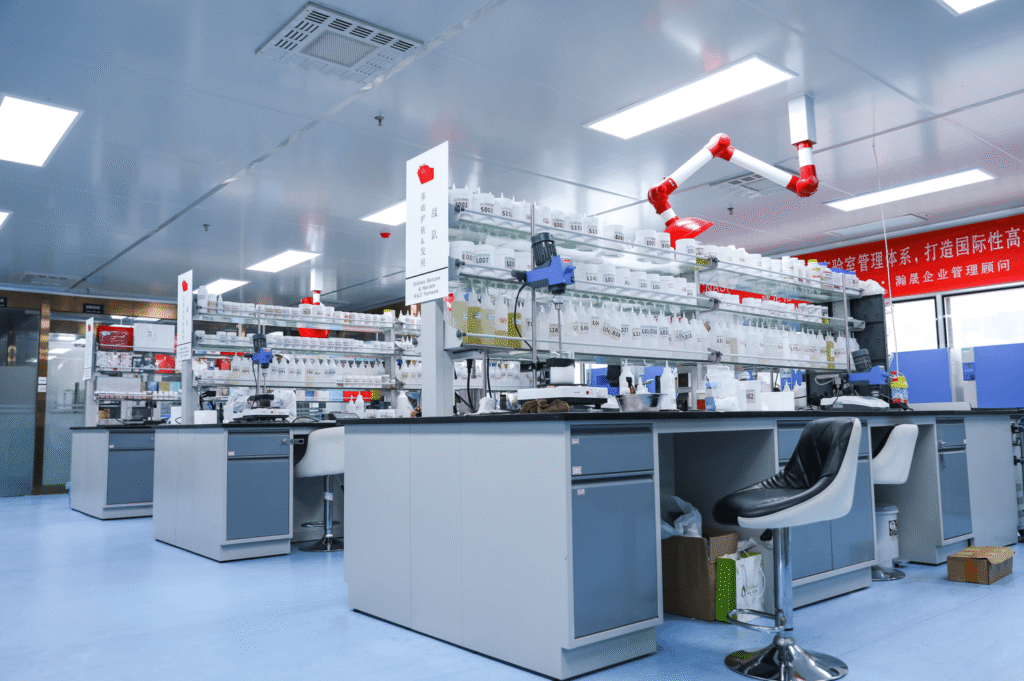
Guangzhou, China is one of the world’s largest cosmetics manufacturing hubs. Factories here benefit from a mature supply chain ecosystem, access to high-quality raw materials, and competitive pricing. MoCelie, for example, is headquartered in Guangzhou’s Baiyun District — the heart of China’s beauty industry — giving clients direct access to world-class manufacturing expertise and efficient logistics for both air and sea freight.
Step 3: Understand the Manufacturing Process
Here is a typical timeline for bringing a skincare product from concept to shelf:
Phase 1: Consultation and Briefing (1-2 weeks)
- Discuss your product vision, target market, and budget
- Review existing formulations or brief the R&D team on custom requirements
- Select packaging materials and design direction
Phase 2: Formulation Development (2-4 weeks)
- For private label: select from existing proven formulations
- For OEM: R&D team creates and tests custom samples based on your brief
- Submit samples for your approval and feedback
- Revise and finalize the formulation
Phase 3: Packaging and Design (2-3 weeks)
- Finalize packaging materials (bottles, jars, boxes, labels)
- Complete artwork and print proofing
- Order and procure packaging materials
Phase 4: Production (2-4 weeks)
- Raw material procurement and quality inspection
- Bulk production and in-process quality control
- Filling, packaging, and labeling
- Final QC inspection
Phase 5: Shipping and Logistics (1-3 weeks)
- Arrange sea freight or air freight to your destination
- Customs clearance documentation
- Delivery to your warehouse or fulfillment center
Total timeline: Typically 8-14 weeks from initial consultation to product delivery, depending on complexity and order volume.
Step 4: Choose Your Product Categories Wisely
For a new brand, it is smart to start with a focused product line rather than trying to do everything at once. Here are proven product categories with strong market demand:
Facial Masks — The entry point for many skincare brands
- Sheet masks are affordable to produce and easy to ship
- Strong social media appeal with high perceived value
- Popular variants: Hyaluronic Acid masks for hydration, Peptide masks for anti-aging, Collagen hydrogel masks for premium positioning
Serums — The high-margin category
- Concentrated formulations command premium pricing
- Anti-aging serums, acne repair serums, and brightening serums are top sellers
- Easy to customize with trending ingredients
Moisturizers (Creams and Lotions) — The everyday essential
- Anti-wrinkle creams and soothing moisturizers have consistent repeat purchase
- Day cream, night cream, and gel textures for different skin types
Cleansers — The volume driver
- Amino acid-based cleansers are trending for their gentle yet effective formula
- Low production cost, high usage frequency
Step 5: Regulatory Compliance and Labeling
Different markets have different regulatory requirements:
United States (FDA)
- Products must be FDA registered and listed
- INCI ingredient labeling required
- Ensure no prohibited ingredients (check FDA Prohibited and Restricted Items)
- SPF claims require OTC drug monograph compliance
Thailand (Thai FDA)
- Cosmetics must be notified through the Thai FDA portal
- Product labels must include Thai language for certain information
- ASEAN Cosmetic Directive compliance required
European Union (EU)
- CPNP (Cosmetic Products Notification Portal) registration
- Responsible Person designation within the EU
- Full ingredient listing per EU Cos Regulation
A reliable manufacturer will provide the necessary documentation — including Certificate of Analysis, MSDS, allergen information, and formulation data — to support your regulatory filing in each market.
Step 6: Budgeting and Minimum Order Quantities
One of the biggest barriers for new brands is understanding the financial commitment. Key cost factors include:
- Packaging materials: Custom bottles, jars, boxes, and labels
- Formulation development: For OEM custom products
- MOQ (Minimum Order Quantity): Many manufacturers offer flexible MOQ options specifically for startup brands — MoCelie offers low MOQs to help new brands test the market without overcommitting inventory
- Shipping and logistics: Depends on volume and destination
- Customs duties and taxes: Varies by country
- Regulatory filing fees: Product registration in target markets
A reputable manufacturer will provide a transparent quote covering all these elements during the consultation phase. Contact us for a customized quote based on your specific product requirements.
Frequently Asked Questions
Q: Can I start with a small order to test the market?
A: Yes. Many manufacturers offer low MOQ options specifically for startup brands. MoCelie offers flexible MOQs, allowing new brands to test the market without overcommitting inventory.
Q: How do I ensure product quality?
A: Work with GMP-certified manufacturers and request samples before bulk production. Ask for stability testing reports, challenge test results, and Certificate of Analysis for each batch.
Q: Can I ship directly to my customers?
A: Yes. Many manufacturers can coordinate with your 3PL (third-party logistics) partner for direct fulfillment.
Q: How long does it take to develop a custom formula?
A: Typically 3-7 days for initial samples, followed by 1-2 rounds of revision. Once approved, bulk production takes 2-4 weeks.
Q: Do I need to be based in China to work with a Chinese manufacturer?
A: Not at all. Most manufacturers have English-speaking sales teams and international logistics partners. Communication happens via email, WhatsApp, or video calls.
Conclusion
Starting a skincare brand is an exciting journey, and choosing the right manufacturing partner sets the foundation for your success. Whether you are looking for private label products to launch quickly or custom OEM formulations to build a unique brand identity, the key is finding a manufacturer that aligns with your quality standards, budget, and timeline.
Get in Touch with MoCelie
We help brands around the world bring their skincare visions to life. With GMP-certified facilities, an experienced R&D team, and a commitment to quality, we are your trusted partner for private label and OEM skincare manufacturing.
Website: https://skincaremanufacturercn.com
Email: Contact us through our website for a quick response
WhatsApp / WeChat: Available via our website
We welcome inquiries from North America, Thailand, and all global markets. Send us your product requirements and we will provide a tailored solution.
MoCelie | Professional Skincare OEM/ODM Manufacturer | Guangzhou, China