PDRN Lotion Private Label: The Complete Guide for Skincare Brands
Thinking about launching a PDRN lotion under your own brand? You are not alone. PDRN is one of the fastest-rising ingredients in skincare, and the lotion format is one of the easiest products for a new brand to build around: it is a daily-use staple with broad appeal and steady repurchases.
But getting from “I want a PDRN lotion” to “samples on my desk” involves a series of decisions: formulation, minimum order quantities, packaging, labeling, certifications, and cost. This guide walks you through the entire private label process, so you know exactly what to expect and what to ask your manufacturer.
Why PDRN Lotion Is a Smart Product for a New Brand
PDRN has been climbing the ingredient rankings for years in Korea, where it is known as “salmon skincare.” The market there has already moved from education to competition, and global brands are following. Clinique launched its first PDRN-focused skincare line in 2026, and major houses such as Lancome are building products around PDRN technology. In other words, the ingredient has left the niche stage and is heading mainstream.
That timing matters for brand founders. When an ingredient moves from medical aesthetics into daily cosmetics, the first brands to market with a clean, well-priced product tend to own the narrative and the search traffic. PDRN lotion is a particularly good entry point because:
- Broad audience. Lotions suit sensitive, dry, and aging skin – three of the largest skincare segments.
- Daily use. A lotion is a repurchase item, not a one-off, which builds recurring revenue.
- Easy to bundle. A PDRN lotion pairs naturally with a PDRN serum or mask for a full routine.
- Lower barrier than you think. With a good private label partner, you can test the market with small batches before committing to a large order.
What Is PDRN, in Plain Terms
PDRN (polydeoxyribonucleotide) is a DNA-derived active that supports the skin’s natural repair and renewal processes. In cosmetics, it is valued for helping to soothe the skin, support the skin barrier, and create a calmer, more even-looking complexion.
You do not need to become a chemist to launch with PDRN, but you do need a manufacturer who understands how to formulate with it. For a full breakdown of how PDRN works, see our PDRN ingredient guide.
Step 1: Define Your Product Concept
Before you talk to any factory, decide what your PDRN lotion actually is:
- Facial or body lotion? They have different textures, claims, and packaging.
- Who is it for? Sensitive skin, aging skin, post-treatment soothing, or a general daily moisturizer.
- What texture? A lightweight gel-lotion or a richer cream-lotion.
- Fragrance-free? This is often a deciding factor for sensitive-skin buyers.
- What is your positioning? Clean, vegan-friendly, dermatologist-tested, or budget-friendly?
The clearer your concept, the fewer sample rounds you will need. A vague brief costs you time; a specific one gets you a near-final formula on the first try.
Step 2: Choose Your PDRN Source and Formula
Not all PDRN is the same. There are three main sourcing routes in the market today:
- Salmon-derived PDRN. The original “salmon skincare” ingredient, extracted from salmon DNA. It carries the most consumer recognition but can raise vegan and allergen questions.
- Fermented PDRN. Produced by microbial fermentation, avoiding animal sourcing while keeping a natural extraction story.
- Recombinant PDRN. Made through biotechnology with precise, repeatable sequences. This is the route behind recent launches from global beauty brands.
Your choice affects cost, positioning, and how easy it is to tell a compelling brand story. For a deeper look at how each route is produced and what it means for your supply chain, see How PDRN Skincare Is Manufactured.
Once the raw material is chosen, your manufacturer develops the formula around your brief: active percentage, texture, pH, preservative system, and skin-feel. A factory with an in-house lab can also run stability and microbial challenge tests to make sure the product stays safe and effective on the shelf.
Step 3: Know the MOQs and Start with Samples
Minimum order quantities (MOQs) depend heavily on packaging:
- Soft tubes typically require a minimum of around 10,000 units, because that is the threshold for running the production line efficiently.
- Bottles (with or without a pump) usually start in the 3,000-5,000 unit range.
Step 4: Packaging and Labeling
Your packaging choice shapes both your price and your MOQ:
- Airless pump bottle. Premium look and precise dosing; higher unit cost.
- Regular bottle with pump. A good mid-range option for facial lotions.
- Soft tube. Cost-effective and practical for body lotions or travel sizes.
Labeling requirements differ by market. For the United States, your label needs an ingredient list using INCI names, net weight, and manufacturer or responsible-party information. For the European Union, you will need a CPNP product notification. For Canada, a cosmetic notification is required. A competent manufacturer should supply the documentation you need for these steps, including certificates of analysis and material safety data sheets.
One compliance note on PDRN: keep your claims cosmetic. Words like “supports,” “soothes,” and “helps maintain” are safe; claims like “treats,” “repairs damage,” or anything medical are not. If your factory warns you about a claim, they are protecting your launch, not slowing it down.
Step 5: Certifications, Testing, and Compliance
Work with a factory that runs a GMP-compliant facility and can provide:
- Stability testing (how the product holds up over time and temperature changes)
- Microbial and challenge testing (safety and preservation)
- Heavy metals testing
- Batch certificates of analysis
- Material safety data sheets and export documentation
- Help with market registration, such as FDA establishment registration for the US or CPNP notification for the EU
Ask every candidate manufacturer for this list in writing. If a factory hesitates, move on.
Step 6: Timeline and Cost Levers
A typical private label timeline looks like this:
- Formula sample: 3-7 days after your brief is confirmed
- Refinement rounds: 3-7 days per round
- Bulk production: 2-4 weeks after the final sample is approved
- Shipping: 2-6 weeks depending on destination
In total, plan for roughly 6-12 weeks from approved sample to goods on the water.
The biggest cost levers, in rough order, are packaging, MOQ, PDRN concentration, and testing. Packaging is usually the largest single lever, so it is worth thinking carefully about the balance between shelf appeal and unit cost. Ask for a fully itemized quote – formula, packaging, molds or tooling, testing, and freight – so you can compare manufacturers fairly.
How to Choose a PDRN Lotion Manufacturer
Use this checklist when evaluating factories:
- GMP-certified facility with an in-house R&D lab
- Proven experience formulating with PDRN and other actives
- Transparent MOQs and sample policy stated clearly, not revealed later
- Full documentation available on request
- Export experience to your target market, such as North America or Southeast Asia
- Responsive communication and willingness to show you the facility on a video call
Remember: you are not just buying a product; you are buying a partner for the next two or three years of your brand. The factory that asks smart questions about your market is often the one that will serve you best.
FAQ
What is the minimum order quantity for PDRN lotion?
It depends on packaging. Soft tubes generally start at around 10,000 units; bottles usually start at 3,000-5,000 units. Confirm the exact MOQ for your chosen packaging before signing anything.
Can I test the market with a small batch first?
Yes. Many manufacturers may not be willing to. But MoCelie could do this to grow up together with partners. We offer neutral bottles with no packaging, so you can validate your formula and packaging with real customers before committing to a large order.
Can the manufacturer develop a custom PDRN formula for my brand?
Yes. A factory with an in-house lab can build a formula around your target audience, adjusting active percentage, texture, preservative system, and fragrance.
What do I need to sell PDRN lotion in the US or EU?
For the US, you need compliant labeling plus FDA establishment registration. For the EU, you need a CPNP notification. Your manufacturer should provide the supporting documents, such as certificates of analysis, stability data, and safety data sheets.
How long does private label PDRN lotion production take?
Plan for roughly 6-12 weeks from approved sample to shipment, depending on formula complexity, packaging, and your destination.
How much does private label PDRN lotion cost?
Cost depends mainly on packaging, MOQ, active concentration, and testing. Ask for an itemized quote so you can compare factories accurately.
Ready to Launch Your PDRN Lotion?
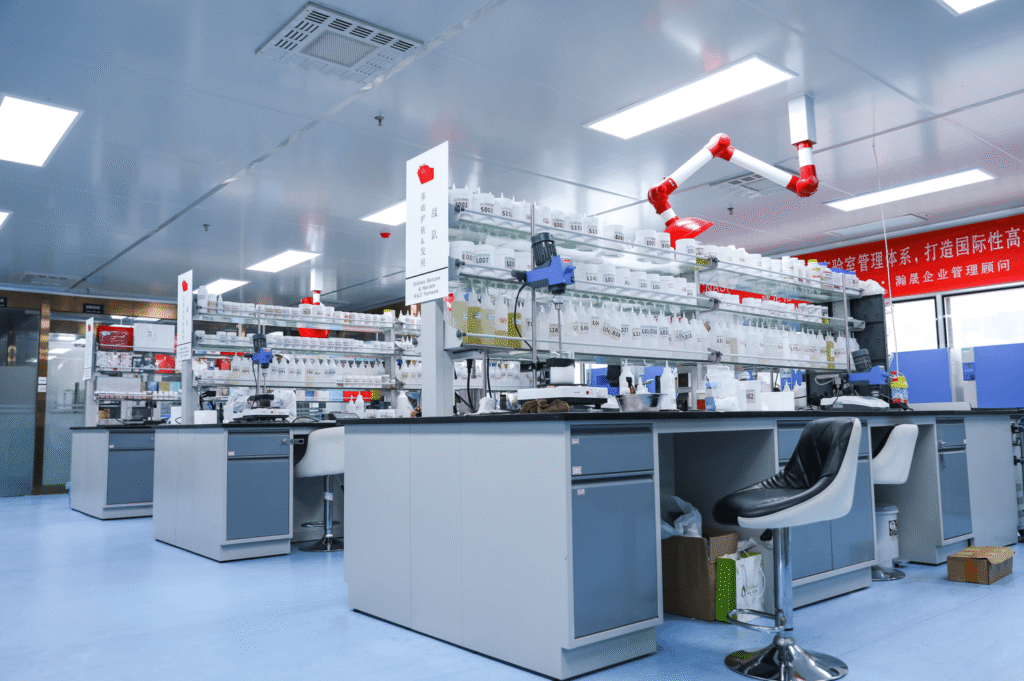
MoCelie is a skincare manufacturer in Guangzhou, China, specializing in OEM/ODM private label production for brands in North America and Southeast Asia. Our product range covers masks, creams, lotions, serums, and cleansers, and we formulate with high-demand actives including PDRN, collagen, Pro-Xylane, ginsenosides, peptides, and retinol.
Tell us your product concept, and we will help you plan the formula, packaging, and timeline. Contact us to request a sample and a detailed quote.