PDRN Serum Private Label: The Complete Guide for Skincare Brands
PDRN has been one of the most talked-about skincare ingredients in recent years, and it is finally moving from clinic rooms onto retail shelves. For beauty brands, the most interesting format right now is the serum: concentrated, easy to layer, and easy to explain. If you are thinking about launching your own PDRN product, this guide walks through everything you need to plan before you brief a factory — what PDRN is, why it works so well as a serum, how to source it, and how the private label process works in practice.
Why PDRN, and Why Now
PDRN (polydeoxyribonucleotide) is a DNA-derived active that supports the skin’s natural renewal processes. It first became famous through injectable treatments in Korea, but the industry’s center of gravity has been shifting toward everyday cosmetics. Industry analyses suggest that cosmetics already account for roughly two-thirds of PDRN applications, and the consumer skincare stage is only just beginning.
The pattern has played out before with hyaluronic acid: a medical-aesthetic ingredient becomes a mainstream skincare staple. PDRN is following the same path — from clinic injections, to professional aftercare lines, to everyday masks, serums, and ampoules. Many industry observers believe the consumer products phase is where the real growth happens, and that the brands that launch now are the ones that will own the category later.
For a brand founder, a PDRN serum is the natural entry point. Serums are where consumers expect to find concentrated, result-oriented actives, and PDRN fits that expectation perfectly. If you want a deeper introduction first, our guide to what PDRN is in skincare covers the ingredient from the ground up.
Why PDRN Works So Well as a Serum
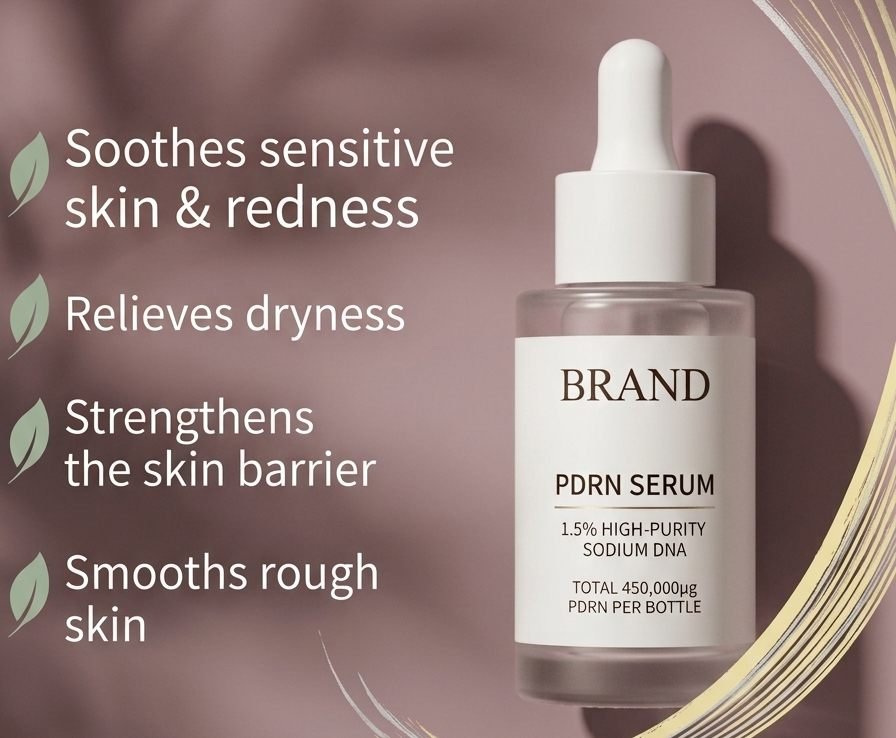
In skincare, PDRN supplies nucleotide building blocks that skin cells can use directly, and supports the signaling pathways involved in renewal and a balanced inflammatory response. In plain terms, it is associated with supporting a healthy barrier, calming the look of redness, and helping skin feel firmer and more rested over time.
The serum format is a natural home for these benefits:
- Higher concentrations. Leave-on serums can carry a meaningful dose of an active without the constraints of a lotion or cream.
- Light, layerable texture. Serums sit comfortably under moisturizers, which makes them easy for consumers to add to existing routines.
- A strong brand story. “DNA-derived renewal active” is easier to explain in a concentrated serum than in a diluted wash-off product.
- Format flexibility. The same formula can be developed as a watery essence, a thicker ampoule, or a milky booster, so you can match your brand’s positioning.
PDRN also layers well with other popular actives, which is why you often see it combined with hyaluronic acid, peptides, Pro-Xylane, and rare ginsenosides. For a closer look at how PDRN compares with other ingredients, our PDRN vs collagen vs snail mucin guide is a good starting point.
PDRN Sourcing: What Brands Should Know
Not all PDRN is the same. There are three main production routes, and each one changes your cost, your claims, and your brand story:
- Salmon-derived PDRN. The original route, extracted from salmon testicular tissue. It built the category in Korea, but it comes with concerns around allergens, ethical sourcing, batch consistency, and limited supply.
- Fermentation-derived PDRN. Produced by microbial fermentation, for example using Halomonas species. This route avoids animal sourcing and supports vegan-friendly positioning. Major manufacturers have been investing heavily in fermentation PDRN patents and production scale.
- Recombinant PDRN. Produced through biotechnology with a precisely controlled sequence. It is the newest route, and global brands have begun launching recombinant PDRN skincare lines, positioning it as the next chapter of the ingredient.
For your brand, the sourcing decision matters beyond the label. Fermentation and recombinant PDRN support vegan and “clean beauty” positioning, tend to be more consistent batch to batch, and avoid the allergen profile of animal-derived material. The trade-off is cost and, in some cases, consumer education. If you want to understand the manufacturing options in depth, our guide to how PDRN skincare is made breaks down all three routes.
Formulation Questions to Ask Your Manufacturer
Before you brief a factory, it helps to have answers to these questions:
- What PDRN concentration is right? Typical commercial serums use concentrations that depend on the raw material supplier’s specification and supporting data. Ask your manufacturer for the supplier’s certificate of analysis and any efficacy or safety data — a serious factory will share it.
- Which actives should I pair? PDRN combines well with humectants and barrier-supporting ingredients. Common pairings include hyaluronic acid, peptides, panthenol, ceramides, Pro-Xylane, and rare ginsenosides. Avoid overloading the formula — more actives does not mean a better serum.
- What texture do I want? Watery essence, concentrated ampoule, and milky booster formulas all have different consumer profiles. Decide based on your market: ampoules and single-dose formats are growing fast in Asia and now in the West.
- What packaging fits? Airless pumps suit daily-use serums; single-dose ampoules (sometimes called BFS or “次抛” style) suit premium, travel-friendly positioning. Single-dose formats are one of the fastest-growing packaging trends in skincare.
- What can I claim? Keep claims cosmetic and realistic. Use wording like “supports the skin’s natural renewal,” “calms the look of redness,” and “helps maintain a healthy moisture barrier.” Avoid repair, treatment, or medical-style claims, which can create regulatory problems in North America and the EU.
The Private Label Process with MoCelie
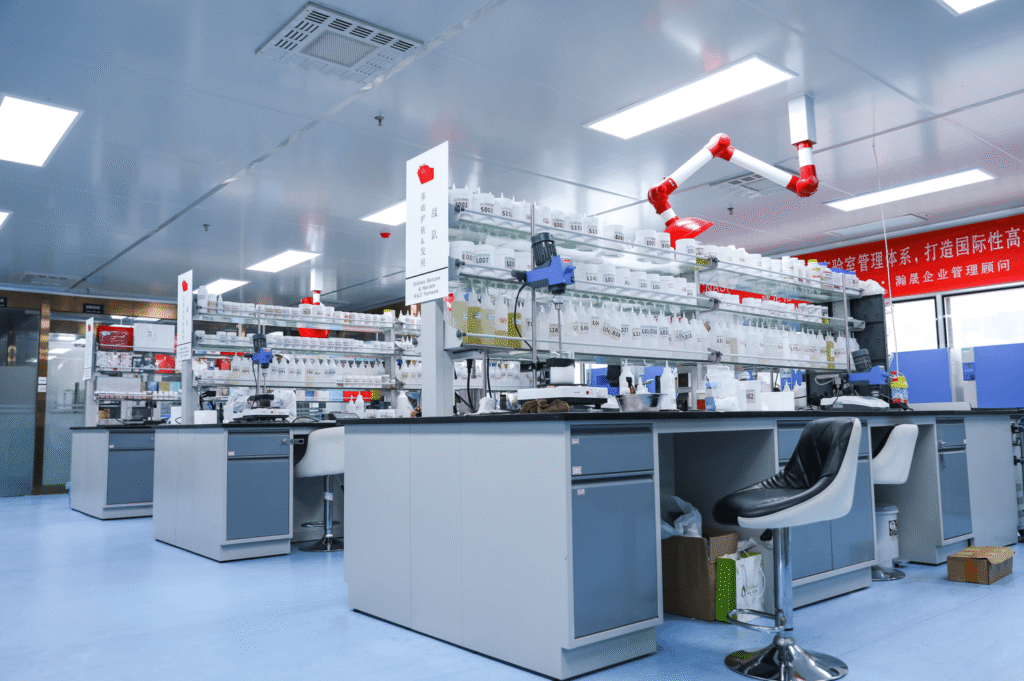
MoCelie is a Guangzhou-based OEM/ODM factory that has been manufacturing skincare since 2014, with a 10,000-plus formula library and ISO 22716 / GMPC certification. If you decide to develop a PDRN serum, the process looks like this:
- Brief us. Tell us your target market, the skin concern you want to address, and the texture you have in mind.
- Receive a sample in 3–7 days. Review the formula, texture, and feel before committing to anything.
- Refine the formula. Adjust the PDRN source, concentration, or supporting actives until it matches your vision.
- Run a small test batch. Start with 300–500 units, in neutral bottle, with no packaging, launch on your own channels, and collect real feedback.
- Scale your formal order. Once demand is confirmed, order minimums start at 3,000–5,000 bottles, and production takes around 15 days after packaging materials are confirmed.
MoCelie was built specifically to serve small brands — the same philosophy that powers our factory story. You can start with a small batch and grow at your own pace. And if you are developing a PDRN lotion instead of a serum, our PDRN lotion private label guide covers that format in detail.
What to Prepare Before You Contact a Factory
A short checklist to make your first conversation productive:
- Target market and claims — which country’s regulations apply, and what wording you want to use
- PDRN source preference — salmon, fermentation, or recombinant
- Concentration and texture — even a rough idea helps the lab
- Packaging direction — airless pump, bottle, or single-dose ampoules
- Budget and MOQ expectations — so the factory can propose realistic options
FAQ
What is the minimum order for a private label PDRN serum? Formal production orders start at 3,000–5,000 bottles, depending on the format. Before that, you can run a small test batch of 300–500 units, in neutral bottle, with no packaging.
How fast can I receive a PDRN serum sample? Most samples are ready within 3–7 days after the formula direction is confirmed.
Can I start with neutral bottles and no packaging? Yes. Small test batches and early orders are supplied in neutral bottles with no packaging while you validate the product and build your own branding.
What PDRN concentration should my serum use? It depends on the raw material supplier’s specification and your claim level. Ask the factory for the supplier’s certificate of analysis and supporting data before finalizing.
Can PDRN be combined with peptides or retinol? Yes, PDRN layers well with many actives, but strong ingredients should be formulated carefully. Ask the lab to run compatibility and stability tests.
Is PDRN serum vegan-friendly? Fermentation-derived and recombinant PDRN avoid animal sourcing, so they support vegan and clean beauty positioning. Salmon-derived PDRN does not.
Is a PDRN Serum Right for Your Brand?
PDRN is at the same point hyaluronic acid was a decade ago: the ingredient story is proven, the consumer wave is just starting, and early brands have room to own the conversation. A private label serum is the lowest-risk way to enter the category — you can test with a few hundred units before committing to a full production run.
If you would like to see what a PDRN serum could look like for your brand, send MoCelie your idea and start with a sample. For brands across the globe, the first order is always welcome.