Pro-Xylane Anti-Aging Cream Private Label: The Complete Guide for Skincare Brands
If you search “anti-aging cream” in any major market, you will quickly find creams built around one molecule — Pro-Xylane (玻色因), the xylose-derived active that premium houses spent two decades turning into a skincare icon. For most of those years, the molecule was effectively exclusive to one company, and the creams that carried it carried luxury price tags.
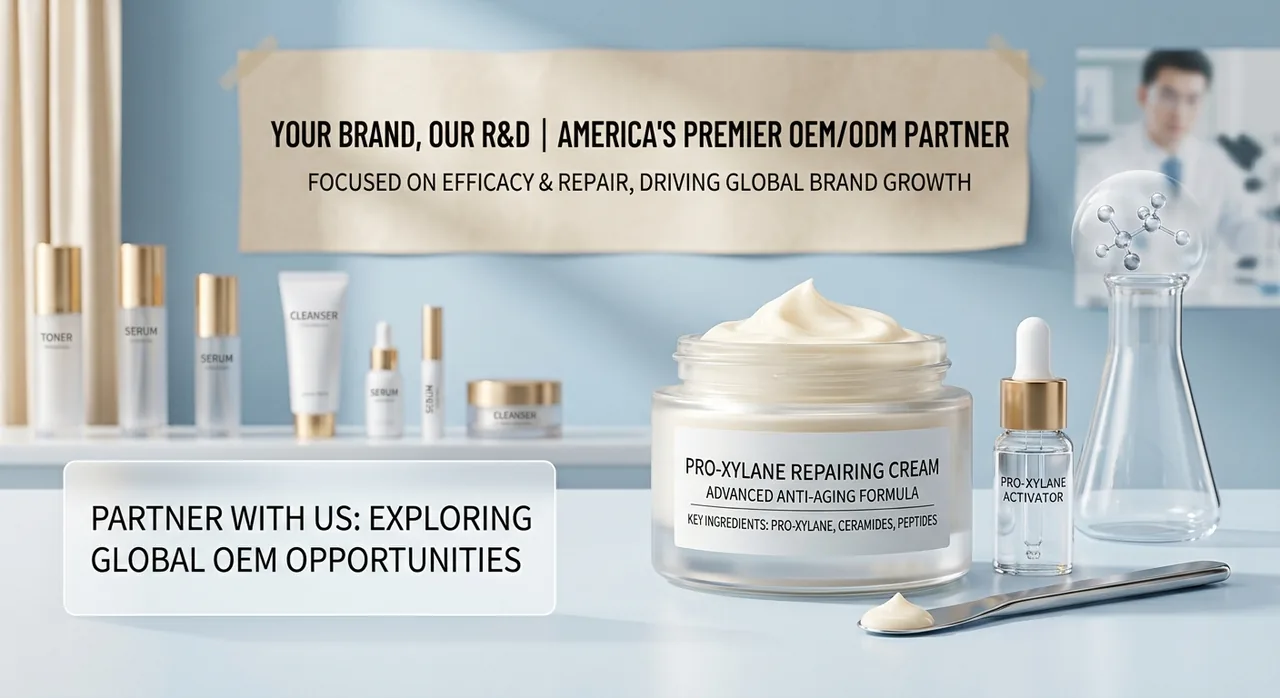
That era has ended. The core synthesis patents completed their term around 2019-2020, compliant suppliers now produce the same chemical structure at a fraction of the old cost, and consumers are actively searching for Pro-Xylane creams at accessible prices. For an independent brand, a private label Pro-Xylane cream is one of the most interesting anti-aging launches available right now.
This guide walks through the opportunity, the formula science, and the practical steps of launching your own Pro-Xylane cream — from concept and sampling to trial batches, packaging, and choosing the right factory partner.
Why Launch a Pro-Xylane Cream Now
The timing argument is simple: Pro-Xylane has reached the same point retinol, niacinamide, and hyaluronic acid reached before they became everyday staples — the ingredient is no longer locked to a single brand or price tier.
A few facts worth knowing before you brief a factory:
- The patents have expired. Pro-Xylane was developed by L’Oreal researchers, who were inspired by xylose from European beech trees, synthesized more than 200 derivatives, and selected the molecule now known as Pro-Xylane. The first patent application dates to 2000, and the core synthesis patents completed their term around 2019-2020. Some online stories still point to 2023-2026, but the core synthetic route expired earlier — a detail worth getting right if you are planning a launch.
- The price of the molecule collapsed. Once the patent wall fell, raw-material suppliers began producing the same structure (INCI: hydroxypropyl tetrahydropyrantriol), and the cost of the ingredient dropped by roughly an order of magnitude.
- The demand is already proven. In China alone, nearly 3,000 Pro-Xylane-containing products were filed with the NMPA in 2020 — the ingredient had clearly moved from niche to mainstream.
- Big brands already did the consumer education. For two decades, prestige houses trained consumers to associate Pro-Xylane creams with visible anti-aging results. Your brand can build on that awareness without carrying a luxury brand’s overhead — the same core molecule, your own formula, and a price that makes sense for a growing brand.
For a new or growing brand, a cream is also the natural hero SKU. Creams anchor a routine, support premium pricing, and are the format consumers most associate with Pro-Xylane. If you want a deeper introduction to the ingredient itself, start with our guide to what Pro-Xylane is in skincare.
What Pro-Xylane Brings to a Cream
Pro-Xylane belongs to a family of sugar-derived actives called C-xylosides. In plain terms, it acts like a “xyloside promoter”: it supports the skin’s own production of glycosaminoglycans (GAGs) — the water-attracting molecules that help the dermis hold volume, moisture, and structure. When GAG and proteoglycan levels are supported, the dermal-epidermal junction is better maintained, and skin looks plumper, more supple, and firmer over time.
Three properties make Pro-Xylane particularly well suited to a cream:
- It is gentle by design. Unlike retinol-style actives, Pro-Xylane does not rely on peeling or irritation. It is considered well tolerated by most skin types, which makes it a credible option for sensitive, reactive, and retinol-averse customers.
- It works gradually and consistently. Visible change builds over weeks and months of daily use — a six-month half-face study comparing a Pro-Xylane cream with a control cream reported better outcomes on skin elasticity, dermal thickness, and fine lines on the Pro-Xylane side.
- It fits a “calm anti-aging” positioning. The safety profile supports claims that are difficult to make with stronger actives: daily, irritation-free anti-aging care suitable for sensitive skin and soothing care around procedures.
One honest note: most of the published Pro-Xylane evidence comes from the developer’s own research program plus in-vitro studies, with fewer large independent trials than retinol has accumulated. It is well-studied enough to trust, but a good brand story should not overpromise — “supports,” “soothes,” and “helps maintain” are the wording that keeps you safe in North America and the EU.
The Formula Story: Barrier, Plump, and Soothe in One Jar
The creams that made Pro-Xylane famous rarely rely on the active alone — they combine it with ingredients that support the barrier, add moisture, and calm the skin. A strong private label concept does the same. One proven direction is a barrier-and-firmness cream that pairs Pro-Xylane with three complementary actives:
| Element | Role in the formula | What it does |
|---|---|---|
| Pro-Xylane | Core anti-aging active | Supports GAG production for a plumper, firmer-looking complexion |
| Ceramide NP | Barrier support | Helps replenish skin-identical lipids that support a resilient barrier |
| Centella Asiatica (CICA) | Soothing support | Calms the look of redness and supports comfort in reactive skin |
| Hyaluronic Acid | Hydration | Attracts and holds moisture for a smooth, plumped appearance |
This combination addresses three different things at once: structure and firmness (Pro-Xylane), barrier resilience (ceramides), and comfort (CICA and hyaluronic acid). That is what makes it a credible “anti-aging + barrier care” cream rather than a single-active novelty — and it is exactly the kind of concept that positions well for sensitive-skin customers who want anti-aging benefits without irritation.
A typical product concept built on this thinking:
Product concept: Pro-Xylane Anti-Aging & Barrier Repair Cream
- Key ingredients: Pro-Xylane (hydroxypropyl tetrahydropyrantriol), Ceramide NP, Centella Asiatica (CICA), Hyaluronic Acid
- Positioning: daily anti-aging and barrier-supporting care
- Selling points: supports barrier resilience, helps plump the look of fine lines and wrinkles, supports a firmer-looking complexion, and offers soothing anti-aging care suitable for sensitive or post-procedure skin
The “30%” Question Every Pro-Xylane Brand Must Answer
Before you formulate, understand the single most confusing thing about this ingredient: the percentage on a label is rarely the percentage of pure active.
Many well-known products advertise “30% Pro-Xylane.” In most cases, that number refers to the amount of a Pro-Xylane solution added to the formula — a mixture that also contains water, solvents, and thickeners. Independent analyses commonly estimate that a classic “30% Pro-Xylane” cream corresponds to roughly 9-11% of the pure active, hydroxypropyl tetrahydropyrantriol. When a major house launched an upgraded version advertised around a 50% solution, third-party estimates put the pure-active equivalent at roughly 15%. These are estimates, not official disclosures — but they explain the gap between label numbers and reality.
As a brand, ask your manufacturer these three questions before you commit to a claim:
- What is the percentage basis? Is the number on the brief the addition level of a raw-material solution, or the percentage of pure active in the finished formula?
- Where does it sit in the INCI list? Pro-Xylane should appear in the first part of the ingredient list, not buried among trace ingredients.
- Is the claim level effective? Meaningful levels typically start above roughly 3% of the pure active. Beyond that, formula quality matters more than stacking a higher number.
There is another layer worth understanding: Pro-Xylane is a high-viscosity raw material, and a formula that carries a meaningful dose while staying smooth, stable, and pleasant on the skin is real formulation work. This is where private label products genuinely differ — not in the molecule, but in the emulsion, texture, and stability. If you want to know exactly how to read Pro-Xylane concentrations, our what is Pro-Xylane guide explains the math in detail.
Step 1: Define Your Cream Concept
Before you brief a factory, decide what your Pro-Xylane cream is:
- Texture family. Rich night cream, lighter gel-cream, or a balmy barrier cream each speaks to a different customer and climate.
- Use occasion. A daily moisturizer with anti-aging positioning, or a dedicated night treatment — the claims and texture differ.
- Target skin. Sensitive skin, post-procedure customers looking for soothing care, or a general anti-aging audience are all credible, but each changes the formula direction.
- Fragrance-free? Often the deciding factor for sensitive-skin buyers and clinical-feeling brands.
- Claim language. Plan for “supports,” “soothes,” “calms the look of redness,” and “helps maintain a healthy moisture barrier.” Medical-style language is not an option in most markets.
Step 2: Brief the Formula
Your manufacturer’s lab needs a clear direction, not a finished formula. Bring these decisions to the first call:
- Target Pro-Xylane level — and agree on whether that means a solution addition level or pure active percentage.
- Supporting actives. A cream with a clear, balanced story outperforms one that lists ten actives. If you use the barrier-and-plump concept above, keep the formula focused.
- Texture and feel. Butter-feel, fast-absorbing, occlusive, or matte? Ask for texture references you can actually try.
- Stability requirements. Emulsion stability, temperature cycling, and shelf-life testing matter more for creams than for simple products — high-viscosity actives need a well-engineered system.
- Allergen and lifestyle filters. Vegan, fragrance-free, and preservative preferences should be stated up front.
Step 3: Sample, Refine, and Start Small
Here is where many small brands get stuck. The cream category often assumes private label means big orders, and some factories will not return a phone call for less.
That is why small-batch testing should be the first order of business:
- Request a sample first. Custom cream samples are typically ready in 3-7 days after your brief is confirmed.
- Run a small trial batch of 300-500 units, in neutral bottle, with no packaging — no custom printing required. This lets you test the formula, texture, and market response with real customers before you commit.
- Scale to a formal order only when demand is confirmed. Formal orders for bottled or jarred creams typically start at 3,000-5,000 units, with tube formats requiring higher volumes. Production takes roughly 15-25 days after packaging materials are confirmed.
For a growing brand, that trial-then-scale path is the difference between a risky bet and a measured launch.
Step 4: Packaging and Filling
Your packaging choices shape cost, shelf appeal, and minimum orders:
- Glass jar. The classic premium cream format; wide-mouth jars suit rich textures.
- Airless pump. Hygienic, dose-controlled, and increasingly expected for higher-priced barrier and anti-aging creams.
- Tube. Practical for lighter gel-creams and travel-friendly positioning.
- Neutral bottles, no packaging, for trials. Simple unbranded jars keep your test batch affordable while you validate the product.
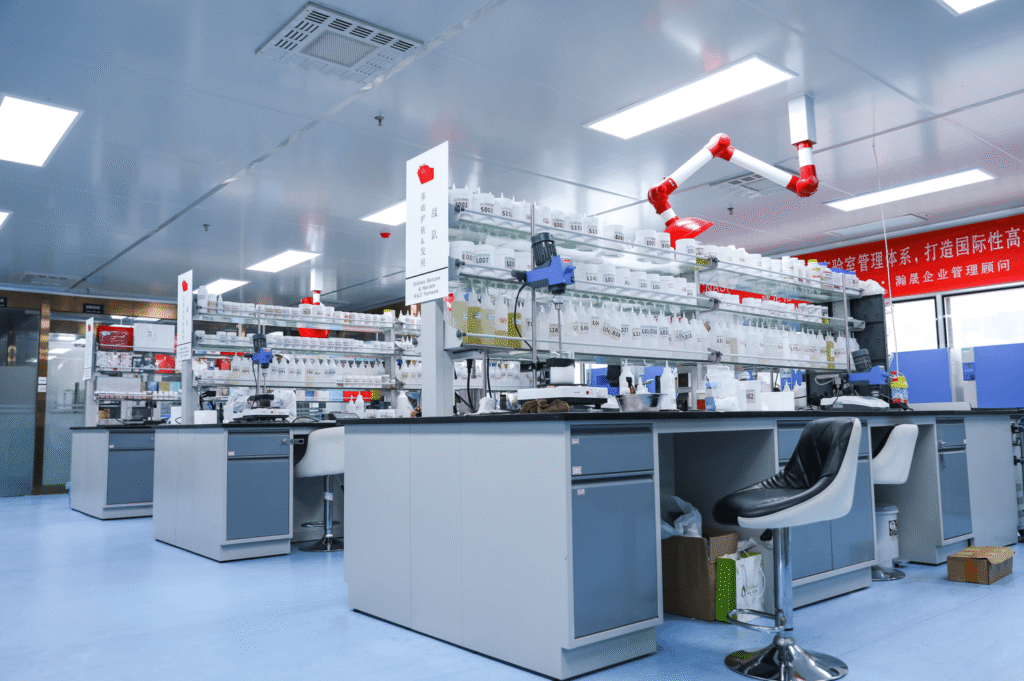
On the factory floor, the essentials are the same regardless of container: filling under controlled cleanroom conditions, precise fill weights, and batch-level quality control that covers appearance, texture, microbial limits, and retention samples for traceability. A factory with real cream-filling lines can move you from a 300-unit trial to a full production run without changing partners.
Step 5: Timeline and Budget
A typical private label cream timeline looks like this:
- Formula sample: 3-7 days after your brief is confirmed
- Refinement rounds: 3-7 days per round
- Small trial batch: after sample approval, usually 300-500 units, in neutral bottle, with no packaging
- Formal production: 15-25 days after packaging materials are confirmed
- Shipping: 2-6 weeks depending on destination
The biggest budget levers, in rough order, are jar or pump complexity, Pro-Xylane level and raw-material grade, supporting actives, emulsion and stability testing, and printing. Ask for a fully itemized quote — formula, raw materials, packaging, testing, and freight — so you can compare factories fairly.
How to Choose a Pro-Xylane Cream Manufacturer
Use this checklist when evaluating factories:
- GMP-certified, dust-controlled facility with an in-house R&D lab
- Real cream production experience — emulsion systems, jar and airless-pump filling lines, not just formulas on paper
- Proven work with actives like Pro-Xylane, including honest percentage-basis discussions
- A stated small-batch policy — trial orders in neutral bottles with no packaging should be welcome, not hidden
- Stability and QC capability in-house, with batch retention and traceability
- Export experience to your target market, such as North America or Southeast Asia
Remember: you are choosing a partner for the next few years of your brand, not a one-time supplier. The factory that treats your 300-unit trial as seriously as a 30,000-unit order is the one that will serve you best as you grow.
Frequently Asked Questions
What is the minimum order for a private label Pro-Xylane cream?
Formal production orders typically start at 3,000-5,000 units for jarred or bottled creams, depending on the format and packaging. Before that, you can run a small trial batch of 300-500 units, in neutral bottle, with no packaging.
Can I start with a small batch trial order first?
Yes. Many manufacturers will not support small orders, but MoCelie built its model around growing brands. Start with 300-500 units, in neutral bottle, with no packaging, test with real customers, and scale your formal order once demand is confirmed.
How fast can I receive a Pro-Xylane cream sample?
Custom samples are typically ready in 3-7 days after your formula brief is confirmed.
What does “30% Pro-Xylane” actually mean?
It usually refers to a 30% solution added to the formula, which corresponds to roughly 9-11% of the pure active. Ask your manufacturer for the percentage basis and check the INCI order before deciding on a claim level.
Can Pro-Xylane be combined with retinol or peptides?
Yes. Pro-Xylane works on GAG support rather than exfoliation, so it layers naturally with peptides, collagen, and hyaluronic acid. Retinol can be added for customers who tolerate it, but the formula must be engineered carefully.
Is a Pro-Xylane cream suitable for sensitive skin?
Pro-Xylane is considered well tolerated by most skin types and is frequently positioned for sensitive-skin and post-procedure care. As with any ingredient, isolated reactions are possible but appear to be rare.
How long does private label cream production take?
Formal production typically takes 15-25 days after packaging materials are confirmed at the factory, plus shipping time to your market.
Ready to Launch Your Pro-Xylane Cream?
MoCelie is a leading skincare manufacturer in sensitive-skin repair, acne-prone skin recovery, and anti-aging care in China. Our 15-person in-house R&D team develops new formulas together with Peking University, Guangdong Pharmaceutical University, and Southern Medical University, as well as the Chinese Academy of Sciences’ Zhuhai Institute and OuZheng Research Institute. We operate from an 11,000 m² facility with over 200 staff under GMPC and ISO 22716 certification — and our lab specializes in barrier-supporting, sensitive-skin-friendly cream formulas, ready to launch your Pro-Xylane cream from sample to full production. Contact us to request a sample and a detailed quote.
Related guides: What Is Pro-Xylane in Skincare? · Pro-Xylane Serum & Ampoule Private Label Guide · What Is PDRN in Skincare? · Meet MoCelie: Our OEM/ODM Factory Story