PDRN Face Mask Private Label: The Complete Guide for Sheet & Hydrogel Masks
Masks have launched more indie skincare brands than almost any other format. They are a single product, easy to explain, easy to try, and easy to photograph. Now PDRN is giving the category a second wind, and brands that move early have a real chance to own the “PDRN mask” search.
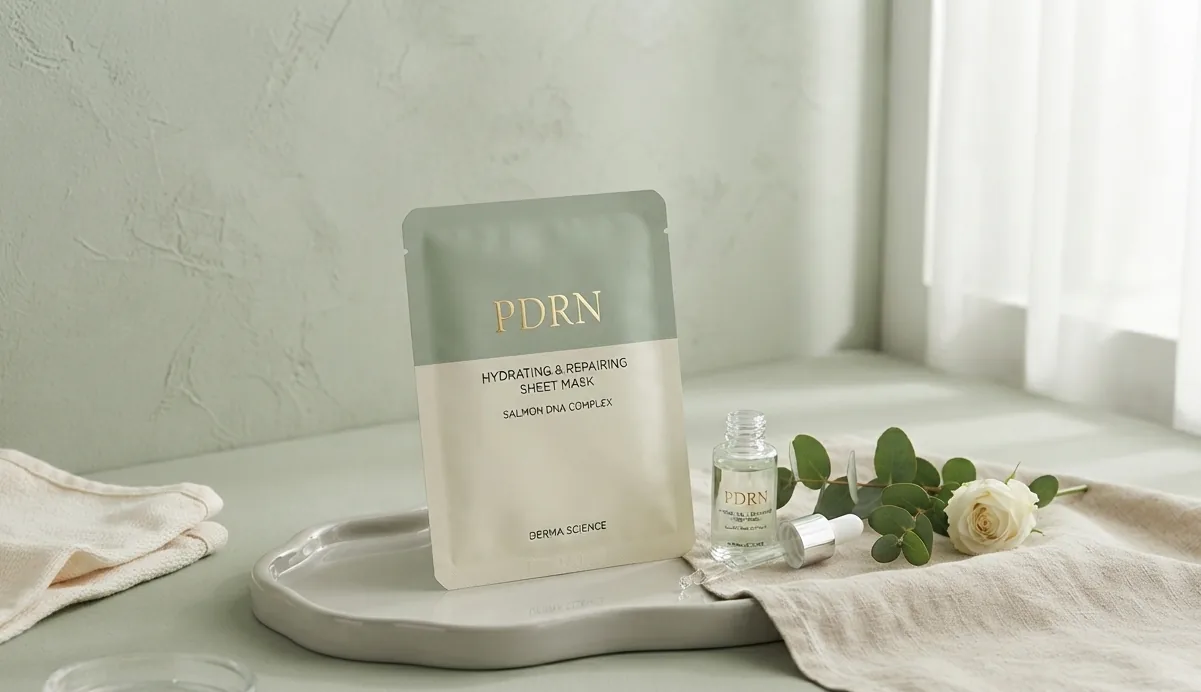
If you are thinking about putting PDRN on your own brand’s face mask, this guide walks through the decisions you will face — sheet or hydrogel, formula and PDRN sourcing, minimum orders, packaging, compliance, and how to choose the right factory partner.
Why a PDRN Mask Is a Smart Product for a New Brand
PDRN (polydeoxyribonucleotide) is a DNA-derived active that has traveled from clinic rooms to everyday cosmetics. It first became famous in Korea, where “salmon skincare” moved from injectables to masks, serums, and ampoules. Global brands are following — Clinique launched its first PDRN-focused skincare line in 2026, and major houses are building products around PDRN technology. The ingredient has clearly left the niche stage.
For a new brand, a mask is one of the lowest-risk ways to enter that wave:
- Single-SKU entry. One mask design is enough to test your ingredient story before you build a full routine.
- Low trial cost. Compared with serums or creams, a small mask run is an affordable first step.
- A sensory brand story. Texture, drenching essence, and the sheet-mask ritual give customers something to feel and talk about.
- A natural fit for PDRN’s audience. PDRN’s reputation centers on soothing care, barrier support, and skin that feels rested — exactly the occasions when people reach for a mask.
- An easy bundle later. A PDRN mask pairs naturally with a PDRN serum or lotion once you are ready to expand.
For a deeper introduction to the ingredient itself, start with our guide to what PDRN is in skincare.
Sheet Mask or Hydrogel Mask: Which Should You Launch?
Your first product decision is the format. The two main options feel and behave differently on the skin:
| Aspect | Sheet Mask | Hydrogel Mask |
|---|---|---|
| What it is | A thin fabric layer (cotton, Tencel, or bio-cellulose) soaked in essence | A gel sheet that holds actives within a hydrogel matrix |
| Skin feel | Wet and essence-rich | Cooling, clingy gel that stays in place without dripping |
| Wear time | About 15-20 minutes | 20-40 minutes, often without the sheet drying out |
| Active delivery | Carried by the liquid essence | Built into the gel for gradual release over a longer wear |
| Best fit | Daily hydration and soothing routines | Intensive care, and soothing for sensitive or stressed skin |
| Typical packaging | Single-use foil pouch | Single-use pouch or a multi-pack jar |
There is no wrong answer — it depends on your positioning. Sheet masks are the classic entry product: simple to sample, familiar to consumers, and easy to price for a first launch. Hydrogel masks read as more premium and technical, which suits brands targeting professional aftercare or sensitive-skin audiences. Many brands launch a sheet mask first and add a hydrogel version once the formula story is proven.
What PDRN Brings to a Mask
In plain terms, PDRN supplies nucleotide building blocks that support the skin’s natural renewal processes and a balanced-looking complexion. Cosmetically, it is associated with helping to calm the look of redness, supporting the skin barrier, and leaving skin feeling soothed and comfortable.
In a sheet mask, PDRN travels in the essence that saturates the fabric. In a hydrogel mask, the active can be incorporated into the gel matrix itself, which allows a longer wear time and a slower, more gradual feel. PDRN also layers well with humectants and barrier-supporting ingredients, so a mask formula commonly combines it with hyaluronic acid, panthenol, ceramides, or peptides.
One thing to remember: with a mask, the first impression is the texture and feel of the essence. Two brands can use the same PDRN source and still feel completely different on the skin, which is why formulation craft matters as much as the active percentage.
Step 1: Define Your Mask Concept
Before you brief any factory, decide what your PDRN mask is:
- Sheet or hydrogel? Use the comparison above to match the format to your brand story.
- Who is it for? Sensitive skin, acne-prone skin looking for soothing care, anti-aging positioning, or recovery after long days, travel, and late nights.
- What essence weight? Single-use pouches typically carry roughly 20-30 ml of essence; your choice affects cost and the “drenched” feel.
- Fragrance-free? Often the deciding factor for sensitive-skin buyers and clinical-feeling brands.
- What claim language? “Supports,” “soothes,” and “helps maintain” keep you safe in North America and the EU. Medical-style claims create regulatory risk.
The more specific your concept, the fewer sample rounds you will need. A vague brief costs you time; a clear one gets you a near-final formula on the first attempt.
Step 2: Choose Your PDRN Source and Formula
Not all PDRN is the same, and your choice affects cost, claims, and brand story:
- Salmon-derived PDRN. The original route and the source behind “salmon skincare” recognition, but it raises vegan and allergen questions.
- Fermented PDRN. Produced by microbial fermentation, avoiding animal sourcing and supporting vegan-friendly positioning.
- Recombinant PDRN. Made through biotechnology with precise, repeatable sequences — the route behind recent global brand launches.
Fermented and recombinant routes tend to be more consistent batch to batch and easier to position as clean or vegan. The trade-off is cost and, sometimes, consumer education. For a deeper look at how each route is produced, see our guide to how PDRN skincare is manufactured.
Once the raw material is chosen, your manufacturer builds the essence or gel around your brief. And resist the urge to overload the formula: a mask with a clear, well-balanced story usually outperforms one that lists ten actives.
Step 3: Know How Mask Manufacturing Works
You do not need to run a factory to brief one, but understanding the process helps you ask the right questions:
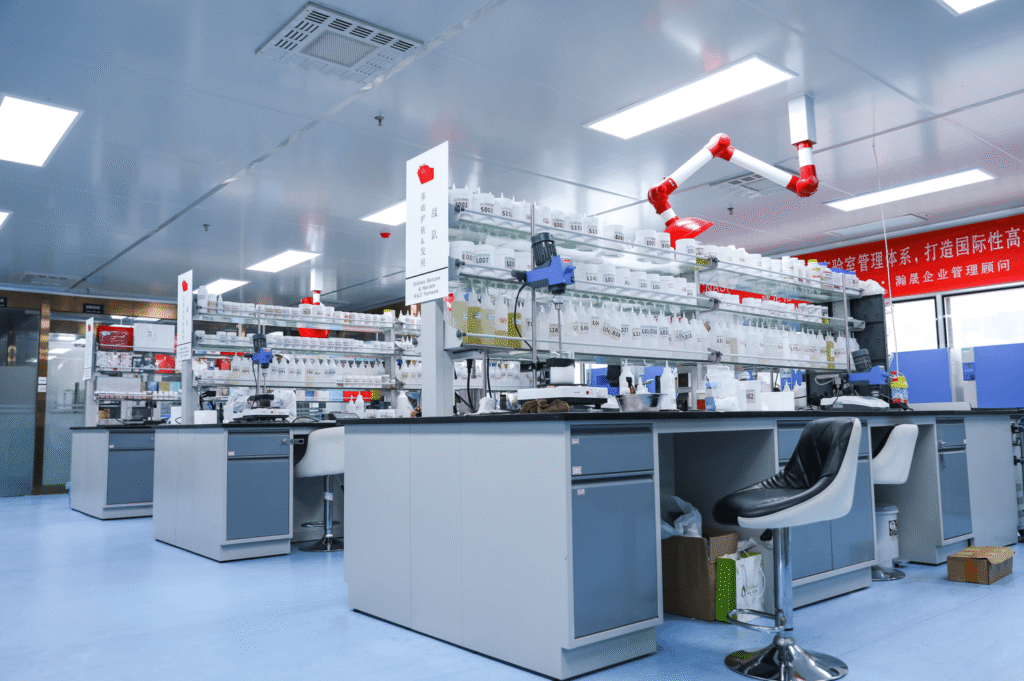
- Essence production. The formula is manufactured in bulk under GMP conditions in a dust-controlled cleanroom, then quality-checked.
- Sheet mask line. Fabric rolls (cotton, Tencel, or bio-cellulose) are cut to shape, folded, loaded with a precisely weighed amount of essence, and sealed into foil pouches.
- Hydrogel line. The gel batch is cast or cured, cut to the mask shape, and packed as a single-use pouch or into a multi-pack jar.
- Quality control. Checks cover seal integrity, fill weight, microbial limits, and batch retention samples for traceability.
Factory scale matters more than you might think. A factory with real mask lines can move you from a 300-unit trial to a full production run without changing partners. MoCelie, for example, runs two automatic mask lines with a capacity of up to 300,000 masks per day inside an 11,000-square-meter facility, so a small first order and a large repeat order are handled in the same place, under the same standards.
Step 4: Start Small: Trial Batches Before Big Orders
Here is where many small brands get stuck. The mask industry often assumes that private label means big orders: formal face mask runs commonly start at 3,000 units or more, and some factories will not return a phone call for less.
That is why small-batch testing should be step one of your plan:
- Request a sample first. Custom mask samples are typically ready in 3-7 days after your brief is confirmed.
- Run a small trial batch of 300-500 units, in neutral bottle, with no packaging — no custom printing required. This lets you test the formula, the feel, and the market response with real customers before you commit.
- Scale to a formal order only when demand is confirmed. Formal face mask orders at MoCelie start at 3,000 units, with bulk production taking roughly 15-25 days after packaging materials are confirmed.
For a growing brand, that trial-then-scale path is the difference between a risky bet and a measured launch. It is also how long-term factory relationships start — on a small, honest first order rather than an oversized one.
Step 5: Packaging, Labeling, and Compliance
Your packaging choices shape cost, shelf appeal, and minimum orders:
- Foil pouch with printed carton. The standard for single-use sheet and hydrogel masks; printing complexity is a major cost lever.
- Multi-pack jar. Popular for hydrogel masks positioned as a weekly routine.
- Neutral bottles, no packaging, for trials. Unbranded pouches keep your test batch simple and affordable.
Keep your claims cosmetic. “Supports the skin barrier,” “soothes,” and “calms the look of redness” are safe; “repairs,” “treats,” or anything medical is not. If your factory warns you about a claim, they are protecting your launch, not slowing it down.
Step 6: Timeline and Budget
A typical private label mask timeline looks like this:
- Formula sample: 3-7 days after your brief is confirmed
- Refinement rounds: 3-7 days per round
- Small trial batch: after sample approval, usually 300-500 units, in neutral bottle, with no packaging
- Formal production: 15-25 days after packaging materials are confirmed
- Shipping: 2-6 weeks depending on destination
The biggest budget levers, in rough order, are essence weight and pouch size, carrier or gel quality, PDRN source and concentration, printing complexity, and testing. Ask for a fully itemized quote — formula, mask material, packaging, testing, and freight — so you can compare factories fairly.
How to Choose a PDRN Mask Manufacturer
Use this checklist when evaluating factories:
- GMP-certified, dust-controlled facility with an in-house R&D lab
- Real mask production lines — not just formulas, but actual sheet and hydrogel manufacturing capacity
- Proven experience formulating with PDRN and other actives
- A stated small-batch policy — trial orders in neutral bottles with no packaging should be welcome, not hidden
- Transparent MOQs confirmed in writing before you start
- Export experience to your target market, such as North America or Southeast Asia
Remember: you are choosing a partner for the next few years of your brand, not a one-time supplier. The factory that treats your 300-unit trial as seriously as a 30,000-unit order is the one that will serve you best as you grow.
Frequently Asked Questions (FAQ)
What is the minimum order quantity for private label face masks?
Formal face mask orders typically start at 3,000 units. Before that, you can run a small trial batch of 300-500 units, in neutral bottle, with no packaging to validate the formula and the market.
Can I start with a small batch trial order first?
Yes. Many manufacturers will not support small orders, but MoCelie built its model around growing brands. Start with 300-500 units, in neutral bottle, with no packaging, test with real customers, and scale your formal order once demand is confirmed.
Should a new brand launch a sheet mask or a hydrogel mask?
Sheet masks are the classic, lower-cost entry point and the easiest format to sample. Hydrogel masks support a premium, technical positioning. If you are unsure, launch a sheet mask first and add a hydrogel version later.
How fast can I receive a PDRN mask sample?
Custom samples are typically ready in 3-7 days after your formula brief is confirmed.
Is PDRN vegan-friendly?
Fermentation-derived and recombinant PDRN avoid animal sourcing, so they support vegan and clean beauty positioning. Salmon-derived PDRN does not.
How long does private label mask production take?
Formal production typically takes 15-25 days after packaging materials are confirmed at the factory, plus shipping time to your market.
Ready to Launch Your PDRN Mask?
MoCelie is a leading skincare manufacturer in sensitive-skin repair, acne-prone skin recovery, and anti-aging care in China. Our 15-person in-house R&D team develops new formulas together with Peking University, Guangdong Pharmaceutical University, and Southern Medical University, as well as the Chinese Academy of Sciences’ Zhuhai Institute. We operate from an 11,000 m² facility with over 200 staff under GMPC and ISO 22716 certification — and our two automatic mask lines produce up to 300,000 masks per day, ready to launch your PDRN sheet or hydrogel mask from sample to full production. Contact us to request a sample and a detailed quote.
Related guides: What Is PDRN in Skincare? · How Is PDRN Skincare Made? · PDRN for Sensitive Skin · PDRN Serum Private Label Guide