PDRN for Acne-Prone Skin: A Calming Support Active for Blemish-Prone and Post-Acne Skin
If you develop skincare for acne-prone customers, you have probably focused on the “clearing” side of the problem: exfoliation, oil control, and targeted actives. But blemish-prone skin is rarely just about blemishes. It is often red, sensitive, easily irritated by strong actives, and dealing with visible marks long after a breakout fades. That is where PDRN enters the conversation — not as another strong active, but as a support layer that helps skin feel calm and comfortable while the rest of the routine does the work.
Why Acne-Prone Skin Needs More Than “Clearing”
Acne-prone skin is shaped by several factors at once: excess oil, clogged pores, bacterial activity, and inflammation. The classic skincare toolbox addresses this with oil-control acids (such as salicylic acid and azelaic acid), niacinamide, and sometimes stronger ingredients like retinoids or benzoyl peroxide. These work, but they share a common weakness: they can be drying and irritating, especially when used daily.
The result is a familiar pattern. The customer gets the blemishes under control, but the skin becomes red, tight, and more sensitive than before. Post-acne marks and lingering redness take weeks to fade. The barrier feels compromised. This is exactly the gap that a “support” active can fill — and it is one of the reasons calming, barrier-friendly ingredients have become the fastest-growing part of blemish-prone skincare.
How PDRN Supports Acne-Prone Skin
PDRN (polydeoxyribonucleotide) is a DNA-derived active made of nucleotide fragments. In skincare, it works as a helper ingredient rather than a strong treatment. For acne-prone skin, the relevant actions are:
- Supports a balanced inflammatory response. PDRN is known for supporting calm skin and reducing the look of redness, which makes it relevant for the inflammation that accompanies blemishes.
- Supports barrier comfort. By supplying nucleotides — the building blocks skin cells use for renewal — PDRN supports the environment where the skin maintains a healthy, comfortable barrier.
- Supports post-acne recovery. PDRN is frequently used in aftercare formulas for sensitive and post-treatment skin, including skin that has been through professional extractions or procedures.
- Lightweight by design. PDRN fits naturally into oil-free, non-greasy formulas, which is essential for blemish-prone skin that dislikes heavy textures.
To be clear about what PDRN is not: it is not an exfoliant, not an oil-controlling agent, and it does not “treat” acne. It is best understood as a calming, supporting ingredient that makes the rest of the routine easier to tolerate. If you want a refresher on the ingredient itself, our guide to what PDRN is in skincare covers the basics.
PDRN vs Common Acne Actives
| Active | Main role | Texture and feel | How it pairs with PDRN |
|---|---|---|---|
| Salicylic acid (BHA) | Supports exfoliation and the look of clearer pores | Can be drying | PDRN adds calming support on top |
| Azelaic acid | Supports even-looking tone and comfort | Sometimes tingles | PDRN helps skin feel more comfortable |
| Niacinamide | Supports oil balance and barrier function | Generally gentle | Natural companion; both barrier-friendly |
| Benzoyl peroxide | Traditionally used for blemish-prone skin | Drying, bleaching risk | PDRN helps counter dryness and tightness |
| Retinoids | Support cell turnover | Often irritating at first | PDRN can support skin during the adjustment phase |
| PDRN | Supports calm, comfort, and barrier renewal | Lightweight, oil-free | Pairs with all of the above as the support layer |
Where PDRN Fits in an Acne Routine
The most practical way to think about PDRN is as the “comfort layer” in a routine built around stronger actives. A simple framework for a blemish-prone routine:
| Step | Product type | Why |
|---|---|---|
| 1 | Gentle cleanser | Prepare the skin without stripping it |
| 2 | Targeted active (BHA, azelaic acid, or retinoid) | The main “clearing” step |
| 3 | PDRN serum or essence | Calming support; helps skin feel comfortable after the active |
| 4 | Light, oil-free moisturizer | Seal in comfort without heavy occlusion |
PDRN is also a natural fit for days when the skin needs a break from strong actives, and for post-procedure care after professional treatments such as extractions or peels. Some brands position a PDRN product specifically as an evening recovery step or a morning pre-moisturizer layer.
Best Formats for Acne-Prone Skin
PDRN can be delivered in several formats, and texture choice matters for blemish-prone customers:
- Lightweight serum. The most common format; easy to layer under a moisturizer and comfortable on oily skin.
- Gel or essence. Great for humid markets and customers who avoid creams entirely.
- Sheet mask. Popular for weekly “calm-down” rituals after a week of strong actives.
- Single-dose ampoule. A premium, travel-friendly format for a targeted recovery phase.
Whichever format you choose, keep it oil-free, fragrance-free, and non-comedogenic, and test for comedogenicity before launch — blemish-prone customers are extremely sensitive to pore-clogging textures.
Formulation Tips for Brands
- Pair with barrier-friendly actives. Niacinamide, zinc PCA, panthenol, and centella asiatica all complement PDRN and reinforce the calming story.
- Watch compatibility. PDRN is generally gentle, but always run stability testing with the acids in your formula. pH and preservative systems matter.
- Keep it simple. A focused formula with one or two support actives performs better than an over-loaded cocktail, and it is easier to claim.
- Claims that stay compliant. Use wording like “supports calm,” “calms the look of redness,” “supports barrier comfort,” and “helps skin feel comfortable during and after blemishes.” Avoid “treats acne,” “cures,” or anything medical.
Why the “Calming Support” Angle Is Under-Served
The acne aisle is crowded with strong actives, but the support layer is underserved. Customers who clear their skin with acids still deal with redness, tightness, and post-acne marks — and very few products speak directly to that feeling. PDRN gives a brand a credible, science-led story about calm and recovery, and it layers easily with the acids customers already use. For a private label launch, a “PDRN calming serum for blemish-prone skin” is a differentiated position that does not compete head-on with the big exfoliating brands.
PDRN also fits the broader shift toward “recovery” and post-acne care in skincare. If you want to compare PDRN with other actives for your brand, our PDRN vs peptides guide and PDRN vs collagen vs snail mucin guide are good starting points.
Frequently Asked Questions
Can PDRN be used on acne-prone skin?
Yes. PDRN is lightweight, oil-free, and gentle, and it is specifically used in formulas for sensitive and blemish-prone skin to support calm and barrier comfort.
Does PDRN treat acne?
No. PDRN does not target bacteria, oil, or clogged pores. It is a support active that helps skin feel calm and comfortable while traditional acne actives do the clearing work.
Can PDRN be combined with salicylic acid or azelaic acid?
Yes, PDRN layers well with exfoliating and oil-balancing actives. A common routine uses the acid first, then a PDRN serum as the calming support step. Ask your lab to run stability testing for the specific formula.
Is PDRN greasy or pore-clogging?
No. PDRN fits naturally into oil-free, lightweight textures. As with any product, choose a non-comedogenic formula and test it on the intended audience.
Is PDRN helpful for post-acne redness?
PDRN is associated with supporting a balanced inflammatory response and calming the look of redness, which makes it a popular choice for post-acne and post-procedure care.
Is PDRN suitable for sensitive skin?
Yes, PDRN is commonly used in sensitive-skin and post-treatment formulas. If you are launching in the US or EU, keep claims cosmetic and compliant.
Ready to Launch a PDRN Product for Acne-Prone Skin?
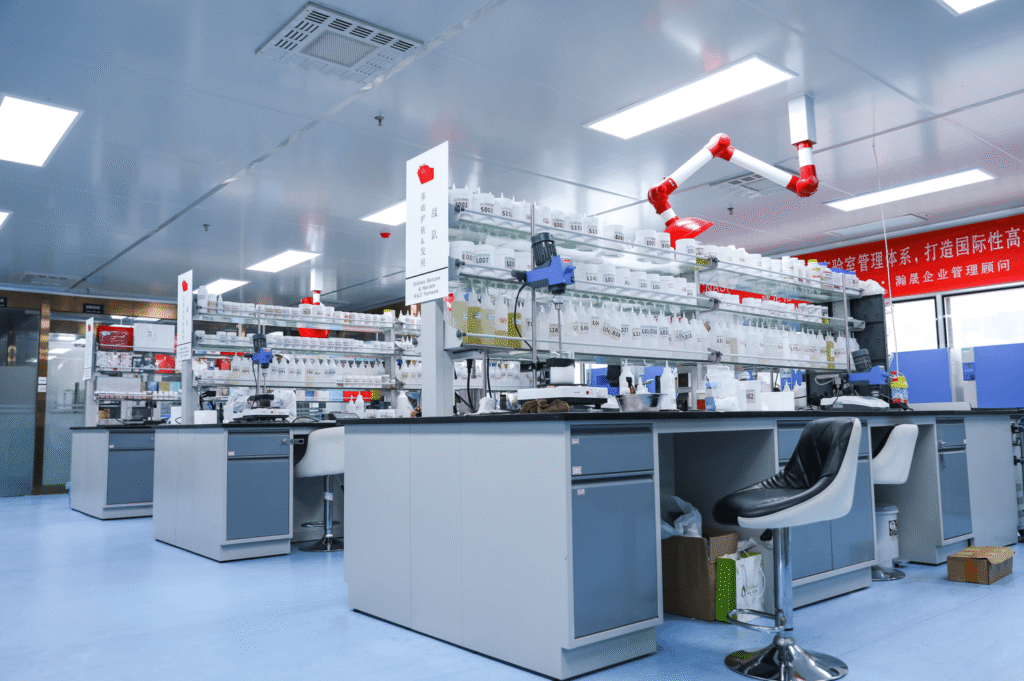
MoCelie is a skincare manufacturer in Guangzhou, China, specializing in OEM/ODM private label production for brands across the globe. Our in-house lab can help you develop a lightweight, non-comedogenic PDRN serum or gel that layers comfortably with acne actives. Contact us to request a sample and a detailed quote.
Related guides: What Is PDRN in Skincare? · How Is PDRN Skincare Made? · PDRN vs Peptides · PDRN Serum Private Label Guide · PDRN vs Collagen vs Snail Mucin